Things to Do in Geneva
Runs the world before lunch, melts the cheese after
Top Things to Do in Geneva
Find activities and tours you'll actually want to do. Book through our partners -- no booking fees.


Plan Your Trip
Essential guides for timing and budgeting
Climate Guide
Best times to visit based on weather and events
View guide →Day Trips
The best excursions and nearby destinations worth the journey
Explore day trips →Where to Stay
Best neighbourhoods, hotel picks, and booking tips
Find hotels →Travel Insurance
What's required, what coverage matters, and how to get a quote
Read guide →What to Pack
Climate-specific gear, essentials, and what to leave at home
See packing list →When Should You Visit Geneva?
Tap a month for weather, crowds, and highlights
View full year-round climate guide →Explore Geneva
Bains Des Paquis
Landmark
Carouge
District
Cern
Landmark
Flower Clock Lhorloge Fleurie
Landmark
Jardin Anglais
Landmark
Jet Deau
Landmark

Lake Geneva Lac Leman
Landmark
Mont Saleve
City
Musee Dart Et Dhistoire
Landmark
Old Town Vieille Ville
District

Palais Des Nations
Landmark
Parc Des Bastions
Landmark
Patek Philippe Museum
Landmark
Red Cross Museum
Landmark
Reformation Wall
Landmark
St Pierre Cathedral
Landmark
United Nations Office At Geneva Unog
Landmark
Your Guide to Geneva
About Geneva
Geneva greets you with water. The Jet d'Eau hurls Lake Léman 140 meters skyward, and on clear days the mist drifts across Quai du Mont-Blanc and lands on skin like cold silk. This is your first lesson: the city is precise even in excess. Trams arrive within seconds of schedule. The flower clock in Jardin Anglais keeps perfect time with thousands of living plants swapped each season.
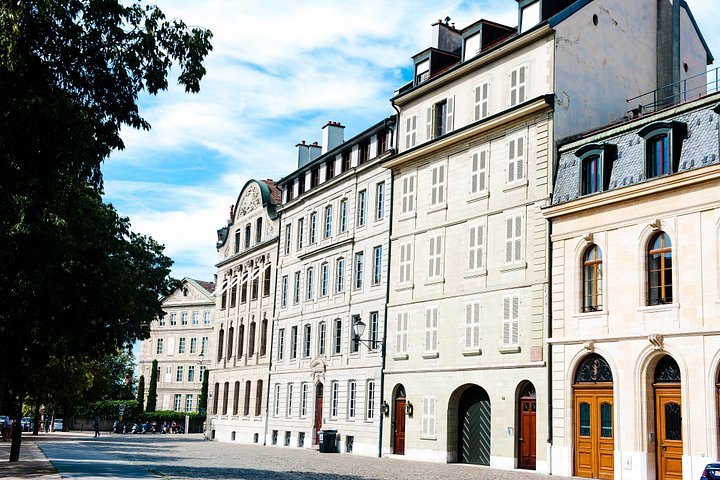
Baristas in Carouge pull espresso like watchmakers, which makes sense in a place that has crafted timepieces since the sixteenth century. Walk uphill from the lake through cobbled lanes of the Vieille Ville and you reach Place du Bourg-de-Four, the city's oldest square, where café chairs sprawl across flagstones and the air carries roasting coffee and fresh bread from boulangeries on Rue de la Cité.
St. Pierre Cathedral looms above, its north tower offering a view that on crisp mornings stretches past the fountain to Mont Blanc itself. Drop to the Pâquis district on the north shore and the mood flips: Portuguese bakeries beside Sri Lankan grocers, and the Bains des Pâquis, a public bathing house on a stone jetty where locals plunge into lake water cold enough to make you gasp, then sit on the same concrete deck eating fondue in January.
Geneva is likely the most expensive city you will visit. A coffee on Rue du Rhône costs what a full meal runs in most of Southeast Asia. That is the honest trade-off. But the air off Lac Léman smells of clean stone and cedar, public transport is free for hotel guests, and a pot of fondue moitié-moitié in the Vieille Ville with a glass of Chasselas from the Lavaux vineyards is one of those meals that outlasts the bill.
Travel Tips
Transportation: Every hotel in Geneva slips you a free transport card at check-in, probably the single best deal in one of the world's priciest cities. It covers every tram, bus, and the yellow Mouettes water taxis that cross the lake in under four minutes. The train from the airport to Cornavin station takes six minutes, and your card covers it, so skip the taxi entirely. Download the TPG app for real-time arrivals. Trams connect most sights and run with the punctuality you expect from the Swiss. The system thins around midnight, though, and ride-hailing options are limited and pricey. Plan late nights around the last tram.
Money: Geneva runs on Swiss francs and the franc currently runs strong against almost everything. Many tourist-facing shops accept euros but give change in francs at an exchange rate that quietly costs you. Cards work nearly everywhere, including market stalls, and contactless is the norm. Here is the part that catches people off guard: tipping is not expected. Service is built into the bill by law, so leaving extra is a courtesy, not an obligation. Round up if the service was good and no one will be offended if you don't. The city is expensive by any honest measure. But at least the social pressure to tip on top of already steep prices doesn't compound it.
Cultural Respect: Swiss punctuality is not a stereotype. It is a civic religion. If a dinner reservation is for seven-thirty, arriving at seven-thirty-five earns you a look that communicates more than most languages can. Sundays in Geneva are quiet by design: most shops close, the streets empty, and making noise in an apartment building after ten at night on any day can result in a formal complaint from your neighbors. Greet shopkeepers with a bonjour when entering and au revoir when leaving, even in a pharmacy. This is French-speaking Switzerland, and the French part means social formalities matter. The Swiss part means they enforce them.
Food Safety: Fondue is the ritual here, not just the meal. The local moitié-moitié blends Gruyère and Vacherin Fribourgeois until the pot smells like warm hay and toasted garlic. Drop your bread in the cheese and tradition says you buy the table a round. Swiss food hygiene is among the strictest in Europe, so safety concerns are the last thing on your mind. The fillets de perche, pan-fried lake perch along the Quai du Mont-Blanc terraces, are faintly sweet from the cold water and worth ordering at least once. For more affordable eating, the kebab shops and Sri Lankan canteens in Pâquis around Rue de Berne serve generous portions at a fraction of old-town prices.
When to Visit
Geneva owns four proper seasons, and each one flips the city so hard that a return visit in a different month feels like stamping a fresh passport. Summer, June through August, shoves the city toward the lake. Thermometers park at 24 to 28 degrees Celsius (75 to 82 Fahrenheit), the Bains des Pâquis swarms with swimmers at sunrise, and the south-shore parks glow until almost ten.
Early August fires up the Fêtes de Genève, fireworks bloom over water, and a pop-up fair along the quays drags half the canton outdoors. Peak season. Hotel rates spike. Tour groups clog the Old Town by ten. Spring is the sweet spot. March clings to 8 to 12 degrees Celsius (46 to 54 Fahrenheit) and can feel grey. Yet April explodes as magnolias pop in Parc des Bastions and terrace cafés reopen with that citywide exhale held all winter.
May nears perfection: 16 to 22 degrees Celsius (61 to 72 Fahrenheit), the lake shifts to deeper blue, and room tabs sit well below the rates they will demand eight weeks later. September and October haul the Chasselas grape harvest onto the Lavaux terraces east along the lake, and the hills above Cologny burn copper and gold.
Thermometers read 10 to 20 degrees Celsius (50 to 68 Fahrenheit), still fine for long walks. Shoulder season. Rooms reappear. Prices slide from summer highs. November turns grey and damp, a month Geneva survives rather than celebrates. December flips the script. The Escalade festival marks the 1602 rout of a Savoyard invasion with torchlight processions through the Old Town, costumed parades, and the ritual smashing of chocolate cauldrons in the streets.
December through February hover between minus 1 and 4 degrees Celsius (30 to 39 Fahrenheit), and the bise, a northeast wind that funnels down the lake, slices through wool. Hotel rates plummet from summer highs, ski resorts lie ninety minutes by train, and fondue tastes better when you need the heat. Handle cold and hate crowds? Winter Geneva carries a quiet authority the summer version never reveals.
More Ways to Experience Geneva
Tours, day trips, and local experiences curated by on-the-ground operators.
Didn't see anything interesting yet?
Browse Viator's full catalog of tours, day trips, food experiences, and private guides in Geneva.
See All Geneva Tours on Viator